


Shop by Region

Pasture seed mixes

Request a custom seed mix

Contact us

Beautiful Blooms with Hancock Seed




- When to plant:
- Spring, Fall, Winter
- Fertilizer:
- Varies
- Seeding rate:
- 10 - 15 lbs. per acre
- Overseeding rate:
- 5 - 10 lbs. per acre
- Seeding depth:
- 1/4 - 1/2 inch
- Ideal ph:
- 6.5 - 7.5
- Gmo:
- No
- Inoculant needed:
- No
- Coated or raw:
- Coated
- Lifecycle:
- Perennial
- Climate zones:
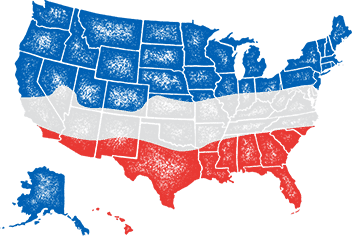
- Cool Season, Transition Zone, Warm Season
White Dutch Clover is one of the few varieties that is perhaps most helpful to homeowners, versus farmers, ranchers, and hunters. This clover serves as an excellent starter and cover crop for soil that simply doesn't want to grow anything else...especially around recent constructed homes.
Product Information
- Application or Use: Lawn, Cover Crop, Cattle Forage, Livestock Grazing, Groundcover, Erosion Control, Food Plot
- Germination Time: 10 - 15 days, under optimal conditions
- Growing Locations: Warm Season, Transition Zone, Cool Season
- Height: 4 - 8 inches
- Sunlight Requirements: 4 - 6 hours, full sun for best results
- Advantages: Resilient nitrogen fixing clover varieties, adapts to most soil types.
- When to Plant: Recommended planting time is fall and spring when night time temperatures are consistently below 65 degrees.
Product Detail
- Perennial white clover
- Withstands moderate drought conditions
-
Pre-inoculated, non-GMO
- Matures between 4 and 8 inches
- Requires less water than traditional lawns
Product Information
White Dutch Clover Seed is a perennial strain of white clover. White Dutch Clover is used for lawns, ground cover, erosion control, cover crop, and in pasture mixtures. White Dutch Clover usually matures between 4 to 8 in.
Many homeowners include White Dutch Clover in their lawn seed mixture because clover sprouts fast, and grows so dependably, that it's a valuable aid in getting a new lawn started.
Nodules on the roots fix nitrogen from the air. Actually, up to 1/3 the nitrogen your lawn needs can be obtained from White Dutch Clover! It grows vigorously even in poor clay subsoil around new home construction. The seed will withstand moderate drought conditions, and grow well, even on barren soil where nothing else wants to grow. It is winter-hardy and it stays so low you can just till it under during spring if you are using it for a cover crop.
One of the most popular reasons for establishing White Dutch Clover as an alternative lawn variety is because of the relative lack of water required compared to a standard grass lawn. White Dutch Clover requires less maintenance in general, and can also grow strongly in shade areas of your yard.
The one downside to White Dutch Clover as a lawn source is its propensity for white flowers (which give this clover its name). For a more pure "green" clover lawn, without flowers, consider Hancock's Micro Clover Seed. Of course, some may actually prefer the white flowers of White Dutch Clover, especially those looking to promote bee culture.
It is one of the most popular form of animal forage to this day. This applies to both livestock and as a source of food plot. Deer love White Dutch Clover!
*Product packaging may appear different than what is pictured.
Sow from March through October (in most areas of the U.S.) at 1/4 lb. per 1,000 sq. ft. Just broadcast the seeds, rake lightly, and keep the seed moist until it sprouts. The seed will withstand moderate drought conditions, and grow well, even on barren soil where nothing else wants to grow. Winter-hardy and it stays so low you can just till it under during Spring if you are using it for a cover crop.
For best results, please review our Planting Guide and the specific product description before planting. Each product has recommended planting methods, timing, and seeding rates that are important for successful establishment. Following these guidelines will help ensure optimal performance and stand success.

Seed Quality
Hancock Seed is dedicated to delivering the best seeds possible to our customers. Hancock Seed grows and harvests many of our products, and we acquire the majority of the rest from other family farmers.
All these seeds are processed, packaged and shipped from Hancock Farm. This helps us ensure that our high standards are met. Unlike much of the competition, we refuse to sell you a seed that was not gathered during the last harvest. You will always receive fresh product from Hancock.
Every seed we grow comes with 40 years of experience behind it...you can rest assured that all of our products are cultivated in a method that assures its potential for growth.

Your cart ( 0 )
White Dutch Clover is one of the few varieties that is perhaps most helpful to homeowners, versus farmers, ranchers, and hunters. This clover serves as an excellent starter and cover crop for soil that simply doesn't want to grow anything else...especially around recent constructed homes.
Product Information
- Application or Use: Lawn, Cover Crop, Cattle Forage, Livestock Grazing, Groundcover, Erosion Control, Food Plot
- Germination Time: 10 - 15 days, under optimal conditions
- Growing Locations: Warm Season, Transition Zone, Cool Season
- Height: 4 - 8 inches
- Sunlight Requirements: 4 - 6 hours, full sun for best results
- Advantages: Resilient nitrogen fixing clover varieties, adapts to most soil types.
- When to Plant: Recommended planting time is fall and spring when night time temperatures are consistently below 65 degrees.
Product Detail
- Perennial white clover
- Withstands moderate drought conditions
-
Pre-inoculated, non-GMO
- Matures between 4 and 8 inches
- Requires less water than traditional lawns
Product Information
White Dutch Clover Seed is a perennial strain of white clover. White Dutch Clover is used for lawns, ground cover, erosion control, cover crop, and in pasture mixtures. White Dutch Clover usually matures between 4 to 8 in.
Many homeowners include White Dutch Clover in their lawn seed mixture because clover sprouts fast, and grows so dependably, that it's a valuable aid in getting a new lawn started.
Nodules on the roots fix nitrogen from the air. Actually, up to 1/3 the nitrogen your lawn needs can be obtained from White Dutch Clover! It grows vigorously even in poor clay subsoil around new home construction. The seed will withstand moderate drought conditions, and grow well, even on barren soil where nothing else wants to grow. It is winter-hardy and it stays so low you can just till it under during spring if you are using it for a cover crop.
One of the most popular reasons for establishing White Dutch Clover as an alternative lawn variety is because of the relative lack of water required compared to a standard grass lawn. White Dutch Clover requires less maintenance in general, and can also grow strongly in shade areas of your yard.
The one downside to White Dutch Clover as a lawn source is its propensity for white flowers (which give this clover its name). For a more pure "green" clover lawn, without flowers, consider Hancock's Micro Clover Seed. Of course, some may actually prefer the white flowers of White Dutch Clover, especially those looking to promote bee culture.
It is one of the most popular form of animal forage to this day. This applies to both livestock and as a source of food plot. Deer love White Dutch Clover!
*Product packaging may appear different than what is pictured.
Sow from March through October (in most areas of the U.S.) at 1/4 lb. per 1,000 sq. ft. Just broadcast the seeds, rake lightly, and keep the seed moist until it sprouts. The seed will withstand moderate drought conditions, and grow well, even on barren soil where nothing else wants to grow. Winter-hardy and it stays so low you can just till it under during Spring if you are using it for a cover crop.
Instructions
For best results, please review our Planting Guide and the specific product description before planting. Each product has recommended planting methods, timing, and seeding rates that are important for successful establishment. Following these guidelines will help ensure optimal performance and stand success.